English| EUR
Suggested for you
More currencies
Choose a language
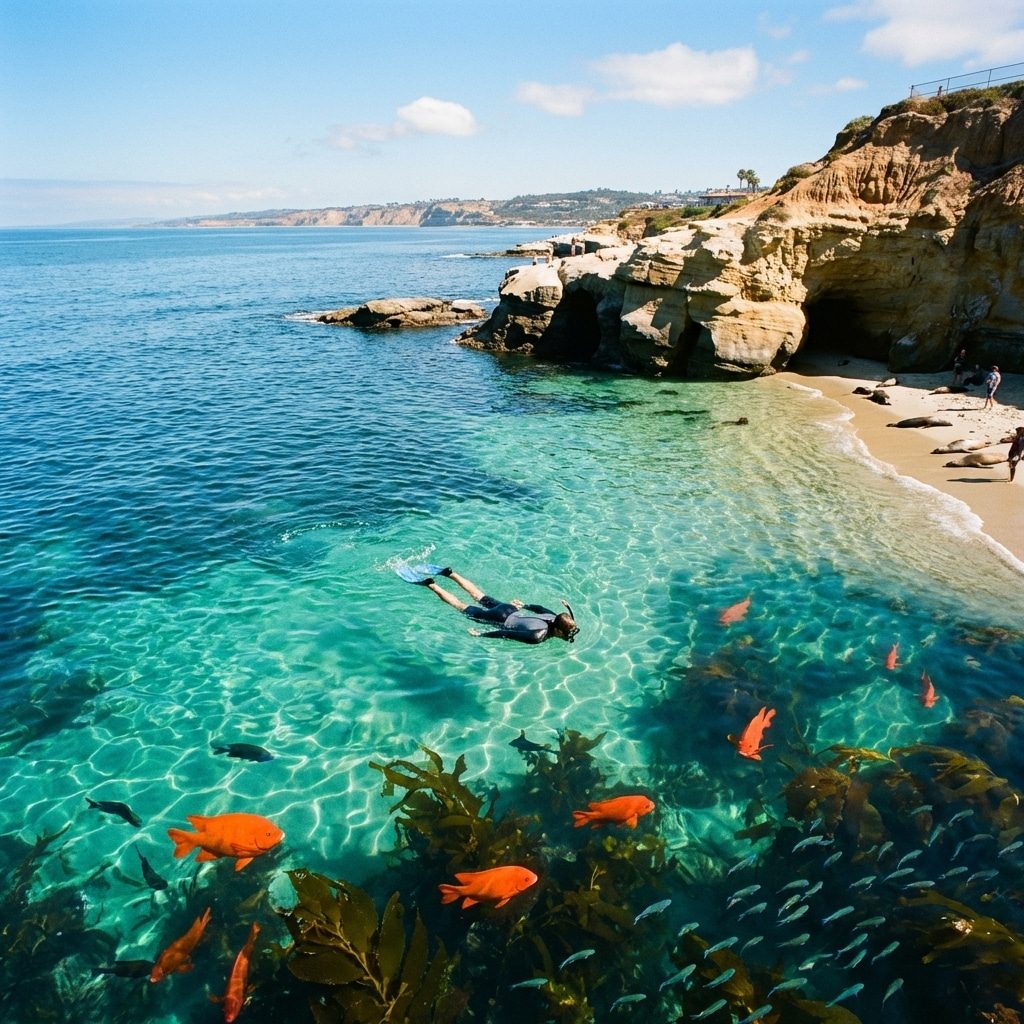
La Jolla Cove sits within a protected ecological reserve where leopard sharks, sea lions, and garibaldi thrive in kelp-filtered water. The question of safety depends less on the marine life itself and more on your ability to read ocean conditions and respect the behaviors of animals that consider this coastline home.
Quick answer
Yes, snorkeling at La Jolla Cove is generally safe for swimmers comfortable in open water, though conditions vary daily. Leopard sharks pose no threat to humans and the reserve's protected status keeps boat traffic minimal. The primary risks come from strong currents during afternoon winds, territorial sea lions during pupping season, and rocky entry points that require sure footing. Calmer morning hours between 7:00 and 11:00 offer the most predictable conditions before thermal winds strengthen surface chop.
La Jolla Cove records more snorkeling entries per year than any other mainland beach in San Diego County, yet the San Diego Lifeguard Service logs fewer than a dozen water rescues annually at this site. The statistical safety reflects not the absence of hazards but the self-selection of participants who recognize their limits and the visible cues that signal when to stay ashore. The underwater topography creates the safety profile. La Jolla Cove snorkeling occurs within a small ecological reserve where a natural kelp barrier dampens wave energy and a sandy basin ringed by rock reefs keeps depths manageable within fifty yards of shore. Visibility ranges from ten to thirty feet depending on recent storms and plankton blooms. Leopard sharks congregate in the shallows during summer months, their spotted bodies often mistaken for a threat despite a diet limited to crustaceans and mollusks. The sharks ignore swimmers entirely. Sea lions present a different calculus. The resident colony tolerates snorkelers outside the June through August pupping season, but mothers defending pups will bark warnings and occasionally bluff-charge. Lifeguards post advisories when aggressive behavior escalates. Current patterns govern whether is it safe to snorkel in La Jolla Cove on any given day. Morning hours before 11:00 see offshore winds at their weakest and surge patterns at their most predictable. Afternoon thermal winds generate surface chop that reduces visibility and creates longshore currents capable of sweeping inattentive swimmers toward the kelp beds north of the cove. Rip currents form sporadically near the east edge where the rock shelf drops away. Lifeguards stationed at 1100 Coast Blvd monitor conditions continuously and will close the cove entrance when swells exceed four feet or currents intensify beyond recreational swimming thresholds. Entry and exit require more caution than the swim itself. The cobblestone beach slopes steeply and becomes slick with algae below the tideline. Sneakers or reef shoes prevent cuts from barnacle-encrusted rocks. Fins go on after wading past the break zone. The protected status of the reserve prohibits touching or harassing marine life, and the California Department of Fish and Wildlife enforces strict penalties for interference with sea lions or collection of shells and organisms. Rangers patrol the cove perimeter during peak visitation months. Water temperature holds between 62 and 68 degrees year-round, cold enough that most snorkelers wear at least a shortie wetsuit for thermal comfort during swims longer than twenty minutes. The safety question resolves not to whether the site permits snorkeling but whether the individual swimmer possesses the skills and judgment to operate in a dynamic marine environment. Strong swimmers comfortable with ocean entry, capable of reading water conditions, and respectful of wildlife boundaries will find La Jolla Cove a low-risk snorkeling venue. Those uncertain about currents or unfamiliar with sea lion behavior should consider guided outings with commercial operators who maintain radio contact with lifeguard stations and carry safety equipment beyond what recreational swimmers typically bring.
“La Jolla Cove records more snorkeling entries per year than any other mainland beach in San Diego County, yet logs fewer than a dozen water rescues annually.”
La Jolla Cove is part of a highly protected ecological zone that supports diverse marine life and requires awareness of local ocean conditions. Understanding the environment helps ensure a safe experience for all snorkelers.
The area is designated as a State Marine Reserve, which prohibits all take of marine resources to maintain biological diversity. This protection has allowed fish populations to flourish within the ecosystem.
Leopard sharks frequent these waters during warmer months but are timid and pose no threat to snorkelers. They typically grow to 4 to 5 feet and prefer to avoid human contact.
Rip currents can occur at any time, especially near rocky points and channel areas. Snorkelers should remain aware of water movement and observe lifeguard flags before entering.
The bright orange Garibaldi is California's official state marine fish and is frequently seen in the cove. Because they are a protected species, it is illegal to touch or disturb them.
The cove features a unique mix of sandy bottoms, rocky reefs, and kelp forests. This variety of habitats provides shelter for sea lions, guitarfish, and numerous invertebrate species.
Water conditions shift based on local currents and swell patterns, which impact overall visibility. Checking the daily lifeguard report provides the most accurate information regarding current water safety.
The best arrival window is 07:00–11:00, which offers clearer water and thinner crowds before afternoon winds pick up. Visiting during these morning hours minimizes exposure to the higher wind speeds and surface chop that often develop by mid-afternoon.
—
Fewer visitors provide more space in the water and easier parking.
70°F–75°F water
Water temperatures reach their annual peak during these months.
65°F–70°F water
Visibility often improves as seasonal swells decrease during this period.
60°F–65°F water
Mornings are typically calm, though marine layer clouds may be present.
Verdict: The most favorable conditions for snorkeling occur on weekday mornings between 07:00 and 11:00 during the months of September or October.
La Jolla Cove's marine protected area enforces strict behavioral rules to safeguard both visitors and the resident seal colony. Following lifeguard instructions and respecting wildlife boundaries prevents citations and keeps the ecosystem intact.
La Jolla Cove is open for public access daily throughout the year. Visitors may access the beach at any time.
Everything you need to know about is it safe to snorkel in la jolla cove
Yes, it is generally considered safe to snorkel in La Jolla Cove during favorable weather conditions. Swimmers should always remain aware of their surroundings and monitor ocean conditions before entering the water. Using the primary keyword, is it safe to snorkel in La Jolla Cove, often depends on individual swimming ability and daily surge levels. It is also wise to check with the local lifeguard station for current water safety updates.
The cove is a protected marine reserve, but surge and currents can fluctuate based on tide changes. Strong currents typically occur near the mouth of the cove, so beginners should stay within designated shallow areas. Evaluating whether is it safe to snorkel in La Jolla Cove often involves respecting these natural marine dynamics. Always stay close to the shore if you are not an experienced open-water swimmer.
Leopard sharks are a common and docile species found in the nearby La Jolla Shores area during summer and early autumn. They are naturally shy and generally pose no threat to snorkelers, making the experience of seeing them quite unique. When visitors ask is it safe to snorkel in La Jolla Cove regarding marine life, they find these sharks prefer to avoid human interaction. You can observe them peacefully from a respectful distance without worry.
Snorkeling with children can be a rewarding activity, provided the water is calm and the children are strong swimmers. Parents should strictly supervise minors and consider using flotation devices for added security in the water. Many families find that when considering is it safe to snorkel in La Jolla Cove with kids, staying in the protected shallow areas is the most appropriate approach. Always prioritize safety over exploring deeper, more turbulent zones.
To maximize safety, utilize the expertise of local guides or participate in a guided San Diego underwater tour. These professionals provide equipment like wetsuits and fins that enhance buoyancy and visibility in the marine reserve. Following the lead of experienced swimmers is the best way to handle the question of is it safe to snorkel in La Jolla Cove. Observing the kelp forest from the surface also helps maintain better spatial awareness.
There is no entrance fee to access the beach, as it is a public area. You can enjoy the marine life and scenery without any cost for admission. While exploring this famous coastal landmark, remember that while nature is free, parking and equipment rentals are separate costs.
The beach area is open daily from 00:00–23:59, allowing for flexible access to the coastline. Lifeguard services are available, but it is important to observe posted signs regarding water safety and restricted zones. Be aware that conditions can change rapidly throughout the day regardless of the hours.
The best arrival window is between 07:00–11:00 to enjoy clearer water and thinner crowds. Arriving early helps avoid the afternoon winds that can increase surge and reduce visibility for snorkelers. Planning your trip during this window ensures a more serene and secure experience in the water.